Beyond the Rating | PTSD Awareness Month
VA disability benefits do more than put a percentage next to your name. They unlock monthly compensation, VA healthcare, and mental health treatment that can stabilize a veteran’s life. For some veterans, that access is the line between crisis and stability. June is PTSD Awareness Month, which makes it a good time to understand how the rating connects to real care. VetsForever is a veteran-founded organization that advocates for veterans pursuing the benefits they earned for PTSD and other service-connected conditions.
Why This Conversation Matters in June
June is PTSD Awareness Month. About 15.8 million veterans live in the United States, and roughly one percent of Americans ever serve. That gap is part of why coming home is so hard for so many. You lose the structure, the mission, and the people who understood you without a word. PTSD, depression, and anxiety can surface long after the uniform comes off, and fewer than half of the veterans who need mental health care actually receive it. VA data points to about 17 veterans a day lost to suicide. When we talk about mental health and getting veterans connected to care, we are already talking about life beyond the rating.

The Benefits Gap: Earned, but Unclaimed
More than 30 percent of eligible veterans never file for VA disability. The reasons are familiar. Confusion about what qualifies. Paperwork that feels built to wear you down. Worry that a claim will follow you into a civilian career. And the old idea that asking for support is a weakness.
Two things worth clearing up. VA disability is not Social Security. You can work and still receive it. These benefits are earned, and they compensate you for conditions connected to your service. The rating is meant to open doors, but many veterans never reach the first one. If you have been putting it off, start with our overview of VA disability claims.
Beyond the Rating: How Benefits Build a Life
In this episode of Beyond the Rating, we line up Maslow’s hierarchy of needs against what VA benefits actually provide. The idea is simple. Before a veteran can thrive, the basics have to hold.
Survival and Safety
Stability starts with the essentials: housing, food, utilities, and healthcare. Even a 10 percent rating matters here. It brings monthly compensation and opens access to VA healthcare, which is often a veteran’s entry point into treatment. Beyond the rating, that monthly payment can be the difference between crisis and a roof overhead.
Belonging
Isolation is one of the quietest risks veterans face after service. Benefits connect you to peer groups, VA programs, and veteran communities that speak your language. At higher rating levels, the financial pressure eases and there is room to reconnect with people instead of just getting through the week.
Self-Esteem
A rating is recognition. It is the VA acknowledging that what happened in service was real and that it cost you something. For a lot of veterans, that recognition lowers self-blame and restores some dignity. A 50 percent rating, for example, brings higher compensation and Priority Group 1 healthcare with no-cost care for your service-connected conditions.
Self-Actualization
Once survival is handled and stability holds, veterans get to look forward again. Education. Advocacy. Mentorship. A 100 percent rating can let a veteran focus fully on healing and purpose instead of survival. That is the whole point of the support. Not a number, but the room to rebuild.
The Proposed 2026 Mental Health Rating Changes
The VA has proposed major changes to how it rates mental health conditions like PTSD, depression, and anxiety. As of now these changes are proposed and not yet final, so the current rules still apply to your claim today. Here is what the proposal would do:
- Replace the old “total occupational and social impairment” standard with a five-domain model that looks at cognition, interpersonal relationships, task completion and life activities, navigating your environment, and self-care.
- Eliminate the 0 percent mental health rating. Any service-connected mental health diagnosis would receive at least 10 percent, which means monthly compensation where there was none before.
- Make higher ratings, including 70 and 100 percent, more attainable for some veterans.
If you already carry a rating, the VA’s longstanding practice protects you from a reduction simply because the criteria changed (see 38 C.F.R. § 3.344). The goal of the proposal is to better reflect invisible wounds and bring more veterans into compensation and care. We are watching it closely and will update veterans as it moves.
VetsForever is a veteran-founded organization. We provide legal representation through VA-accredited representatives for VA disability claims, appeals, and military discharge upgrades. Our team has direct VBMS access to your VA file. Serving veterans nationwide.
Why VA-Accredited Representation Matter
Benefits only matter if you can reach them. The mental health claims process carries real emotional weight, and the rules are dense. This is where accredited representation earns its keep. The right representation means education on your conditions, careful claims development, and support if you need the appeals process. It also means working with someone who understands the weight of what you are documenting.
VetsForever advocates for veterans moving from confusion to clarity to stability. We are veterans serving veterans, and our team has direct VBMS access to your VA file. That access lets us work your file directly so nothing slips through the cracks.
Watch the Episode
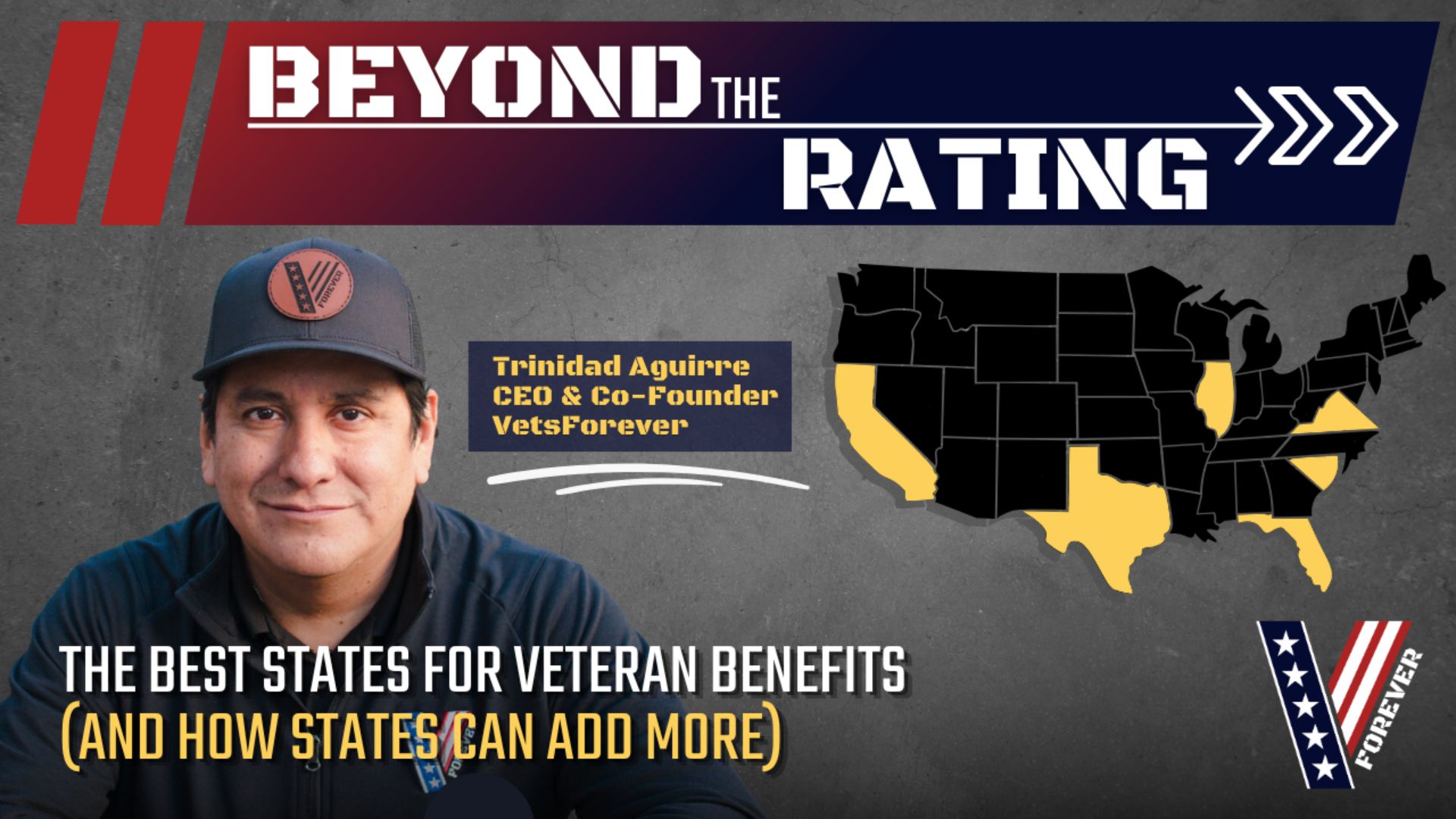
In this episode of Beyond the Rating, host Trinidad Aguirre breaks down how VA disability benefits reach far past a compensation percentage and into a veteran’s housing, healthcare, mental health, and sense of purpose. The conversation maps benefits against Maslow’s hierarchy of needs, from survival to self-actualization, and explains why more than 30 percent of eligible veterans never file. It also covers the proposed 2026 mental health rating changes and what they could mean for veterans with PTSD. Chapter timestamps are below.
Chapters
00:00 Intro
01:15 Why VA Benefits Matter More Than Ever
02:28 Maslow’s Hierarchy of Needs and How VA Benefits Align
03:20 The Benefits Gap
04:04 Life After Service
05:22 Survival
06:27 Safety
07:22 Belonging
08:07 Self-Esteem
08:54 Self-Actualization
09:32 New Mental Health Legislation
10:42 Why VA-Accredited Guidance Matters
11:58 In Conclusion
Frequently Asked Questions
What is PTSD Awareness Month?
PTSD Awareness Month is observed every June to build understanding of post-traumatic stress disorder and connect people to treatment. For veterans, it is a reminder that PTSD is a recognized, service-connectable condition and that support is available.
How does the VA rate PTSD?
The VA rates PTSD and other mental health conditions using the General Rating Formula for Mental Disorders under 38 C.F.R. § 4.130. Ratings run 0, 10, 30, 50, 70, and 100 percent, based on the frequency, severity, and duration of your symptoms and how they affect your daily functioning. If your symptoms have worsened, you may have grounds to pursue a higher PTSD rating.
Can I get VA disability for PTSD if I can still work?
Yes. You do not have to be unable to work to qualify. The rating reflects how your symptoms affect your life, and many working veterans carry service-connected mental health ratings. If your condition keeps you from holding steady work, you may also look at TDIU under 38 C.F.R. § 4.16.
What are the proposed 2026 mental health rating changes?
The VA has proposed a five-domain model for rating mental health conditions, elimination of the 0 percent rating, and a minimum 10 percent rating for any service-connected mental health diagnosis. These changes are proposed and not final, so current criteria still apply to claims filed today.
Will the new rules lower my current rating?
The VA’s longstanding practice protects existing ratings from being reduced just because the criteria changed (see 38 C.F.R. § 3.344, the rule on stabilization of disability ratings). If you file for an increase after new rules take effect, your condition could be evaluated under the updated criteria.
How do I prove my PTSD is connected to my service?
Service connection for PTSD generally requires a current diagnosis, an in-service stressor, and a medical link between the two, under 38 C.F.R. § 3.304(f). Medical records, a current diagnosis, buddy statements, and a detailed personal statement all strengthen the claim. The VA may also schedule a C&P exam to evaluate your condition. Our post on non-combat PTSD and VA claims walks through how stressors are documented.
Can VA benefits really make a difference for mental health and stability?
Yes. Beyond monthly compensation, benefits open access to VA healthcare, therapy, and PTSD programs. Easing financial pressure also lowers one of the biggest drivers of mental health strain, which is why benefits can be life-changing and, for some veterans, lifesaving.
Why work with a VA-accredited representative?
Accredited representatives are authorized to represent veterans with VA claims and appeals and are held to professional standards. At VetsForever, we provide legal representation through VA-accredited representatives, and our team has direct VBMS access to your VA file, so nothing falls through the cracks.
Get Started
You earned these benefits. If PTSD or another service-connected condition is affecting your life, do not let the paperwork keep you from the care and compensation you are owed. Get a case review with VetsForever and take the first step toward stability.