Brandon Hunter, U.S. Air Force veteran and VetsForever’s Military Discharge Upgrade Lead, shares how self-discipline, service, and a willingness to start over are shaping a second career built to last.
When you spend years in uniform, your identity tends to follow a clear set of orders. Wake up. Accomplish the mission. Take care of your people. For Brandon Hunter, Air Force veteran and former Personnel specialist, that structure wasn’t just routine — it was purpose. Leaving it behind meant rebuilding from scratch.
His motivation to enlist was straightforward: live life on his own terms. What the military gave him in return was something he hadn’t fully anticipated — a deep sense of accountability to the people around him.
“Moments I got to be there for my troops, whether they knew it or not.” Those are the ones that stayed with him.
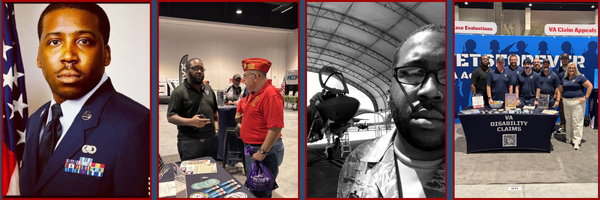
Transitioning out of the Air Force could have been harder. He’ll tell you it’s still a process. But compared to what he feared going in, civilian life has met him with more grace than he expected. The biggest adjustment wasn’t the workload or the pay cut. It was figuring out what to do with the time.
“Free time” can be a loaded phrase for veterans used to structure. His solution was intentional: fill it with things that actually matter. He replaced old habits with self-care, found new adventures, and let the rest settle into place on its own timeline.
“Great things aren’t achieved with a safety net in place. Safety nets, backup plans — these are distractions, excuses to give up early.”
That philosophy, borrowed from AEW wrestler Jon Moxley, sounds unconventional. But it fits. Post-service life doesn’t come with a safety net. You either build something or you don’t. He’s building.
Since leaving active duty, he’s stayed close to the veteran community — volunteering regularly, working directly with veterans, and developing a project of his own designed to help other service members understand the benefits and entitlements they’ve earned. The details are still coming together, but the intent is clear: close the knowledge gap that costs veterans real money and real care.
His connection to VetsForever came through SkillBridge — the Department of Defense’s transition program that places separating service members with civilian employers before they leave the military. What he found at VetsForever wasn’t just a job placement. It was an education.
He went through his own VA claims process while working alongside VetsForever’s team. What he learned changed his approach entirely — and gave him a firsthand understanding of what veterans face at every stage of the process.
His experience moving through the BDD process gave him insight that no training manual could; he knows what it feels like to wait, to wonder, and to get an answer finally.
“I’d ask them: do you want someone who’ll still be there six months from now when things get complicated?” That’s what matters. Accountability. Someone who can’t just disappear.”
That’s the question he’d put to any veteran still on the fence about reaching out. At VetsForever, legal representation is provided through VA-accredited representatives — and that accountability, Brandon will tell you, is what makes the difference when the process gets hard.
His personal resiliency has been rebuilt on a few solid pillars: family, community, and the sense that he’s working toward something of his own. That last part matters. Veterans are builders by trade. Give them a mission with meaning, and they’ll see it through.
He’s not done serving. The uniform is gone. The mission isn’t.